
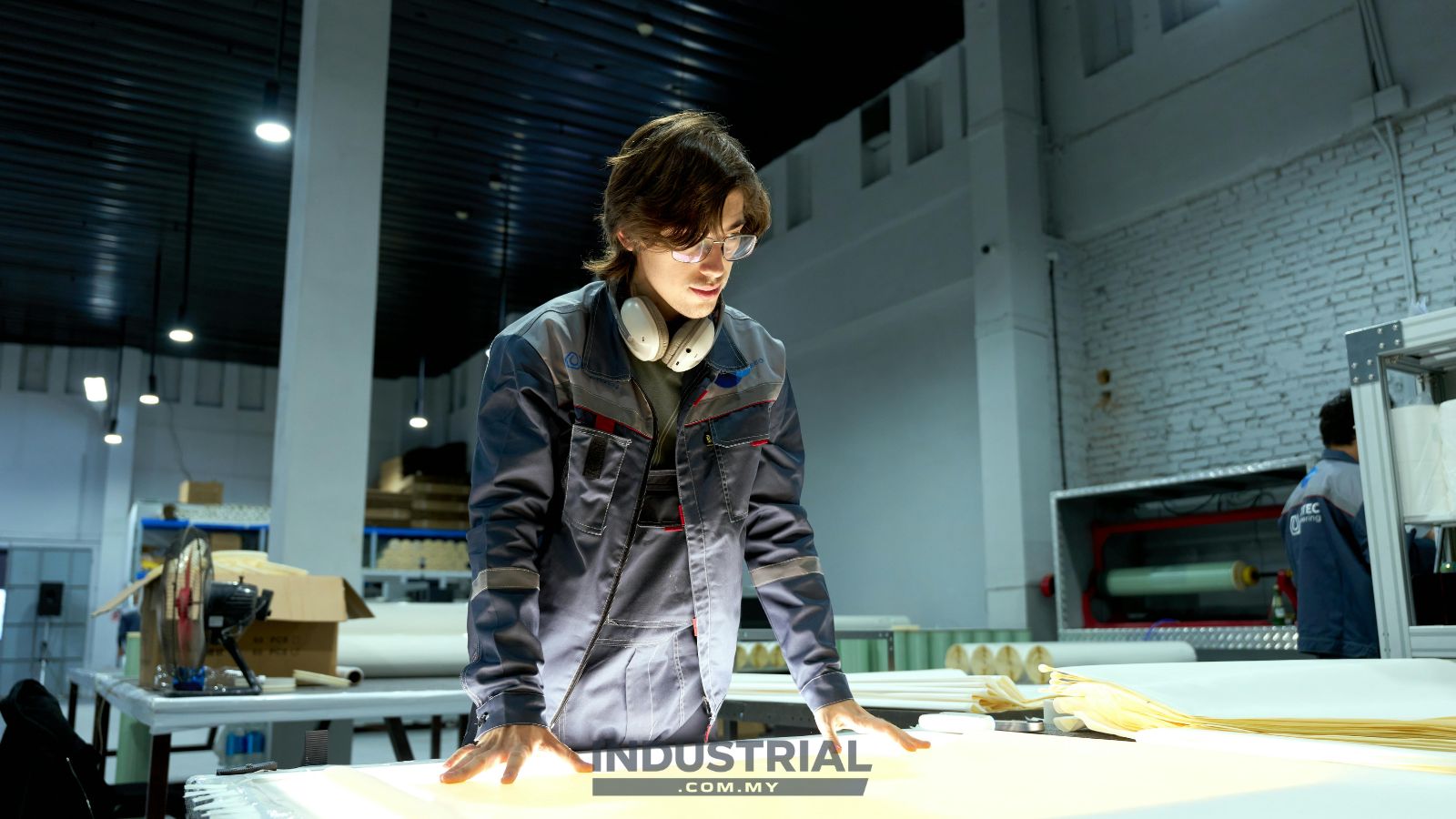
An industrial workbench looks like one of the simplest items of equipment in a factory or workshop, a flat surface, a frame, maybe some storage underneath. And in many facilities, it is treated accordingly: procured cheaply, replaced when it fails, and given almost no engineering consideration.
That approach costs more than it saves. A workbench that is the wrong height forces operators into postures that cause musculoskeletal injuries over time, and musculoskeletal injuries are the leading cause of lost-time incidents in Malaysian manufacturing and workshop environments. A bench that is undersized for the loads placed on it deflects, vibrates, and eventually fails structurally. A bench with the wrong surface material becomes damaged or contaminated within months. And a bench that does not include adequate storage and organisation forces operators to waste time searching for tools and components, time that adds up to meaningful productivity losses over a year of operation.
You do not need to be a mechanical engineer to specify a good industrial workbench. You just need to know the right questions to ask. This guide covers them, written for the people in Malaysian manufacturing and maintenance who are actually responsible for making the call.
The Real Cost of Getting Workbench Specification Wrong
The financial case for proper workbench specification is stronger than most facility managers appreciate before they have experienced the cost of poor specification.
- Ergonomic injuries, Malaysia’s SOCSO statistics consistently show manual handling and ergonomic injuries as a leading category of workplace injury claims. A workbench at the wrong height for the operators using it is a direct ergonomic risk, and the cost of a single lost-time injury claim, in SOCSO contributions, replacement labour, investigation time and the indirect costs of disrupted production, typically exceeds the cost of a properly specified workbench many times over
- Structural failure, an undersized or poorly welded bench that collapses or significantly deflects under load creates a safety incident and a production disruption. The direct replacement cost is minor; the disruption cost is not
- Surface contamination and product damage, an inappropriate surface material on a workbench used for precision assembly, electronic component handling or food contact applications can damage products or create compliance failures that far exceed the cost of the right surface specification
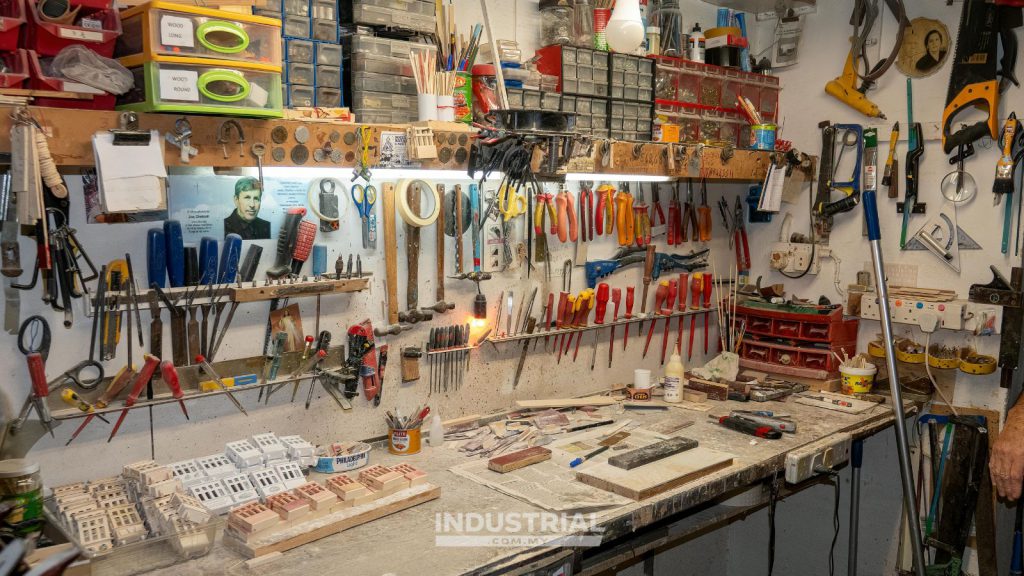
- Tool and component organisation, a workbench without appropriate tool holders, shadow boards, component bins and storage means operators spend time searching for items rather than working. In a lean manufacturing context, this is classified as waste, and it is waste that a properly configured workbench eliminates at the source
Specifying Industrial Workbench Load Ratings
The load rating of a workbench is the most fundamental specification, and the one most often specified incorrectly, almost always on the low side. Two types of load must be considered:
Uniform Distributed Load (UDL)
The load rating quoted by most workbench manufacturers is a uniform distributed load, the total weight of items placed across the entire work surface, expressed in kilograms. A bench rated at 500 kg UDL can support 500 kg spread evenly across its surface. Common industrial workbench UDL ratings in the Malaysian market are:
- Light duty: 200–300 kg UDL, suitable for electronic assembly, inspection, light component work, laboratory tasks
- Medium duty: 300–500 kg UDL, suitable for most general manufacturing assembly, tool maintenance, light machining support work
- Heavy duty: 500–1,000 kg UDL, suitable for heavy component assembly, die and mould work, maintenance of large equipment
- Extra heavy / machine base duty: 1,000 kg+ UDL, suitable for mounting heavy machines, press operations, anvil work
Point Load
Even more important than the UDL rating in many applications is the point load capacity, the load the bench can handle concentrated in a small area. A heavy-duty bench rated at 750 kg UDL may not be rated for the point load of a hydraulic press, vice or concentrated tool impact in a single location. Always confirm point load capacity for benches that will be used with heavy concentrated loads.
Work Surface Materials: Matching the Surface to the Task
| Surface Material | Load Capacity | Chemical Resistance | Best Applications |
|---|---|---|---|
| Hardwood (solid beech / teak) | Very high, absorbs impact | Low, absorbs chemicals | Joinery, carpentry, heavy assembly, traditional workshop |
| Laminated hardwood | High | Low to moderate | General assembly, maintenance workshops |
| Steel plate (mild, powder-coated) | Extremely high | Good when coated, rusts if damaged | Heavy machining, pressing, die work, maintenance |
| Stainless steel | Very high | Excellent, Grade 316 resists most chemicals | Food processing, pharmaceutical, wet areas, chemical handling |
| Phenolic resin / Trespa | Medium-high | Excellent, broad chemical resistance | Electronics assembly, quality inspection, laboratory |
| ESD-dissipative laminate | Medium | Good | Electronics manufacturing, ESD Protected Areas |
| Rubber mat overlay | Supplemental, reduces impact | Moderate, depends on rubber grade | Precision instrument, optical, sensitive component work |
Workbench Ergonomics: Getting the Height Right
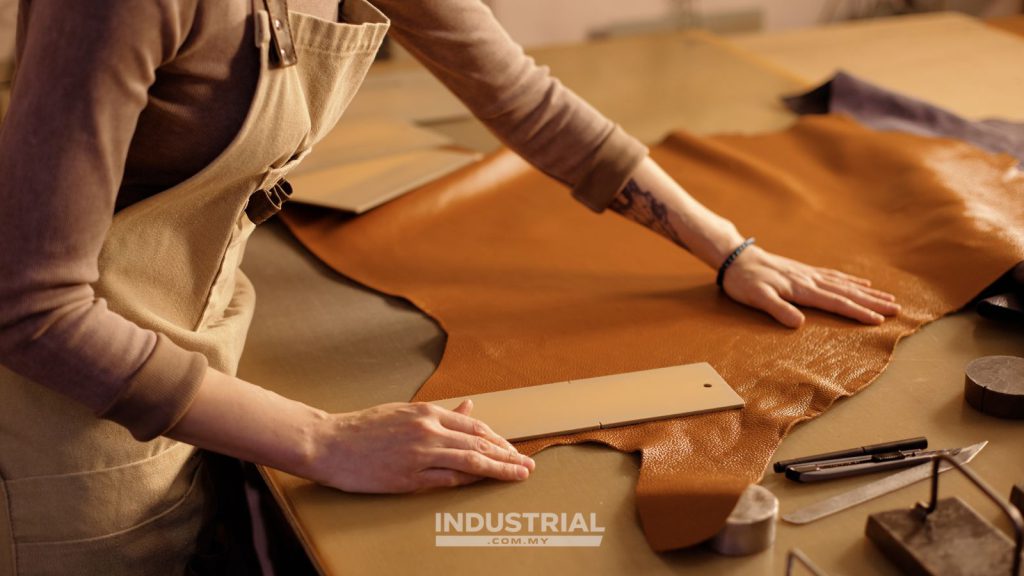
Workbench height is the single ergonomic variable with the greatest impact on operator comfort and injury risk, and it is almost never given sufficient attention in Malaysian facility planning. The correct work surface height depends on the nature of the task:
- Seated work (fine assembly, inspection, testing), work surface height should be approximately elbow height when seated, typically 650–700 mm for the Malaysian average operator height
- Standing light work (assembly, packing, quality inspection), work surface at approximately 900–950 mm for standing elbow height, allowing slight forearm rest without shoulder elevation
- Standing heavy work (pressing, hammering, heavy assembly), work surface 50–100 mm lower than standing elbow height, typically 800–900 mm, to allow force application without shoulder strain
- Standing precision work (close inspection, fine soldering, optical alignment), work surface slightly higher than elbow, with appropriate task lighting and magnification
For facilities with operators of significantly different heights, or where tasks are mixed across the same bench position, height-adjustable workbenches are the ergonomically correct solution, they eliminate the compromise that a fixed-height bench necessarily involves. Electrically-actuated height-adjustable industrial benches are available in Malaysia and represent a worthwhile investment for positions where operators spend significant time and where ergonomic risk is a genuine concern.
Bespoke Workbench Design: When Off-the-Shelf Is Not Enough
Standard catalogue workbenches cover a large proportion of industrial applications well, but there are many situations where a bespoke designed and fabricated workbench is the right solution. These include:
- Non-standard dimensions required by the facility layout, unusual bay widths, corner positions, integration with conveyor systems
- Integrated services, benches with built-in power tracks, compressed air connections, data ports, lighting, waste collection systems or fume extraction integration
- Multi-level configurations, raised tool storage areas, monitor mounts, overhead shelving integrated into the bench structure
- Machine-mounting benches, benches designed to absorb vibration, carry specific machine weights with defined bolt patterns, or integrate with machine guarding
- Specialist surface requirements, combination surfaces with multiple materials for different areas of the same bench, or surfaces with integrated fixtures and locating features
Industrial Workbench Solutions in Malaysia
For Malaysian manufacturing, engineering, maintenance and workshop environments requiring industrial workbenches that combine the right load rating, ergonomic specification, surface material and storage configuration, whether from a proven standard range or designed to precise bespoke requirements, working with a specialist workbench supplier with genuine engineering capability makes the difference between a bench that works and one that creates problems.
Recommended Supplier: Machlab
Machlab supplies all kinds of industrial workbenches built to withstand the demands of the harshest environments. They provide bespoke services to design and produce workbenches to meet all requirements, with a large variety of materials, finishing and mechanical specifications from light-duty to heavy-duty. Whether you need a standard high-load assembly bench, a custom-configured maintenance workstation, or a precision ESD-rated electronics bench, Machlab’s engineering capability and bespoke fabrication service covers the full spectrum of Malaysian industrial workbench requirements.
Visit machlab.com.my to explore their industrial workbench range and bespoke design services.
The Right Bench Makes Every Shift Better
An industrial workbench is in use for every hour of every shift, it is one of the highest-contact pieces of equipment in any workshop or manufacturing environment. Specifying it with the same engineering rigour applied to higher-profile capital equipment is not over-engineering; it is recognition of the genuine operational and human cost of getting it wrong.
Load rate correctly and conservatively. Match the surface to the specific chemical and physical demands of the task. Set the height for the actual operators and the actual work being done. Add storage and organisation features that eliminate the time wasted searching for tools. The result is a workstation that supports productive, safe work rather than quietly working against it.
- Industrial Springs in Malaysia: A Complete Guide to Coil, Compression, Torsion and Tension Spring Selection
- HIPS Plastic Roll Malaysia: A Complete Buyer’s Guide
- Industrial Plastic Sheets in Malaysia: A Complete Buyer’s Guide
- Panduan Lengkap Memilih Kotak Pembungkusan Berkualiti untuk Perniagaan Makanan di Malaysia

