
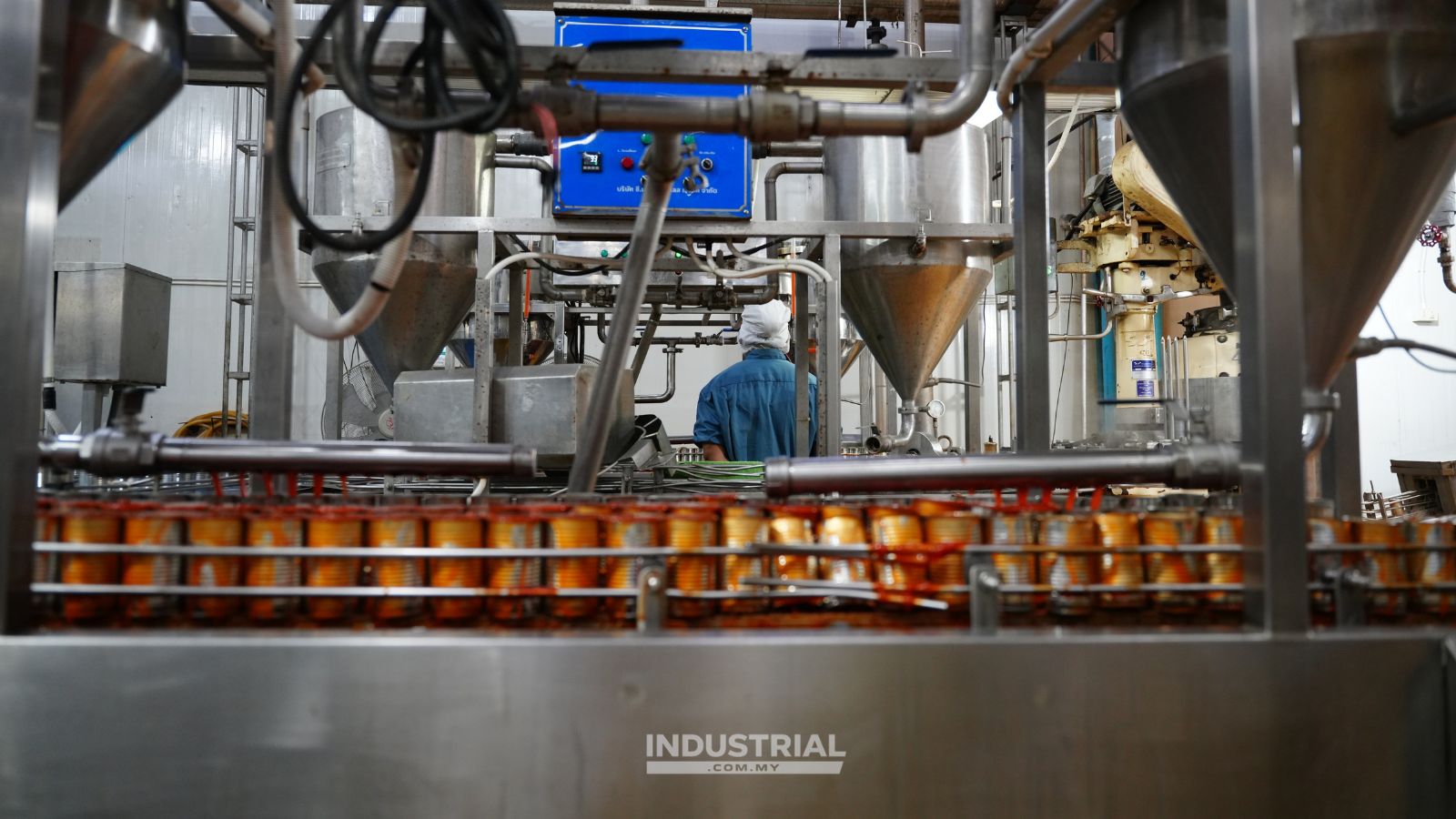
Walk through any Malaysian food, chemical, agricultural or pharmaceutical manufacturing plant and you will find some form of bagging or filling system at the end of the production line. It may be a simple manual station where operators fill bags by hand. It may be a semi-automated system with a volumetric filler and a heat sealer. Or it may be a fully automated line with an electronic net-weight filler, automatic bag placer, gas flushing, sealing, checkweigher and robotic palletizer, running continuously with minimal operator intervention.
The enormous range of available bagging and filling technologies reflects an equally enormous range of products, production volumes, packaging formats and regulatory requirements across Malaysian manufacturing. A system perfectly suited to filling 25 kg bags of industrial cement would be entirely wrong for filling 500 g retail packs of milk powder. A big bag filling station for bulk agricultural chemicals has essentially nothing in common with a hygienic liquid filler for pharmaceutical products.
This guide is written for production managers, plant engineers and operations directors at Malaysian manufacturing facilities who need a clear, practical understanding of the bagging and filling technology landscape, what the main system types are, how they compare, what determines the right choice for a specific product and production environment, and what to consider when evaluating suppliers.
Understanding Your Product: The Starting Point for System Selection
Before evaluating any filling or bagging technology, you need a clear characterisation of the product you are packaging. The physical and chemical properties of the product determine which filling principles will work reliably and which will not.
Flowability
How easily does the product flow under gravity or with mechanical assistance? Free-flowing granules (sugar, salt, uniform plastic pellets) are easy to handle with almost any filling technology. Cohesive powders, particularly fine powders that tend to bridge, rat-hole or aerate, are much more demanding and require filling systems designed specifically for difficult-flow materials. Products with a Hausner ratio (tapped density / bulk density) above 1.4 are generally considered cohesive and require careful system design to achieve reliable feeding and accurate weighing.
Bulk Density and Particle Size
The bulk density of the product determines the physical volume that must move through the filling system to achieve target package weight. A product at 300 kg/m³ occupies roughly three times the volume of one at 900 kg/m³ at the same weight, significantly affecting filling head sizing and throughput rates. Fine powders below approximately 100 microns aerate easily and are prone to flooding in gravity-fed systems, requiring controlled, de-aerated filling approaches.
Hygroscopicity and Viscosity
Products that absorb moisture from the atmosphere change their flowability, clumping behaviour and shelf life. Filling systems for hygroscopic products (milk powder, certain chemicals, pharmaceutical excipients) must minimise product exposure to ambient air, using nitrogen or dry air blanketing, or designing for controlled-atmosphere operation. For liquid and semi-liquid products, viscosity is the defining property: water-thin liquids fill easily with simple gravity fillers, while viscous products like margarine and peanut butter require positive displacement pumps and heated product lines.
The Main Bagging and Filling System Types
Open-Mouth Bagging Systems
Open-mouth bag fillers fill pre-made bags that are placed on the filling spout, filled to the target weight, then closed by sewing, heat sealing or gluing. Net-weight open-mouth baggers weigh each dose before filling, the target weight of product is weighed in a hopper above the filling spout, then discharged into the waiting bag. This is the most accurate filling method, used wherever fill weight accuracy and give-away minimisation are important: food products sold by weight, regulated pharmaceutical products, premium specialty chemicals. Gross-weight baggers weigh bag plus product together during filling, simpler and lower cost, but less accurate.
Form-Fill-Seal (FFS) Systems
Form-fill-seal machines create the bag from a reel of flat film, fill it, and seal it, all in a continuous automated sequence. Vertical FFS (VFFS) machines are widely used in Malaysian food manufacturing for snack foods, confectionery, rice, sugar and flour in retail pack sizes. FFS systems are generally faster than pre-made bag systems for the same throughput, but require investment in film supply infrastructure and are less flexible for bag size changes, a size change requires changeover of forming tube, sealing jaws and film web.
Valve Bag Filling Systems
Valve bags have a small self-closing valve in one corner through which the product is filled under pressure. Once the target weight is reached and the filling spout is withdrawn, the valve closes automatically. Valve bag systems are particularly suited to fine, dusty powders, cement, limestone, gypsum, flour, starch, where the enclosed filling process minimises dust generation. Widely used in Malaysia’s construction materials, cement, chemical and agricultural sectors.
Big Bag (FIBC) Filling Systems
Flexible intermediate bulk containers (FIBCs or big bags) are large woven polypropylene bags typically rated for 500 kg to 2,000 kg of product. Big bag filling stations are used for bulk packaging of industrial chemicals, minerals, agricultural fertilisers, recycled plastic pellets and construction aggregates. Automated big bag filling stations integrate conveyor infeed for empty bags, automatic hook engagement, fill-to-weight control, and outfeed conveyor for filled bags, significantly reducing labour content of bulk packaging operations.
Liquid and Viscous Product Filling Systems
Liquid fillers range from simple gravity fillers for free-flowing liquids to sophisticated servo-driven piston fillers, gear pump fillers and mass flow meter fillers for high-accuracy pharmaceutical, food and chemical applications. For viscous products, margarine, cooking fats, pastes, gels, the filling system must maintain product temperature to keep viscosity within the pumpable range, use positive displacement pumping for consistent volumes, and provide drip-free cutoff at the end of each fill cycle. Margarine filling is a specialist application requiring heated product contact surfaces and careful hygienic design.
Comparing Filling Accuracy Methods
| Filling Method | How It Works | Typical Accuracy | Best For |
|---|---|---|---|
| Net weight (weigh-then-fill) | Product weighed in hopper before discharge into package | ±0.1–0.5% of target weight | High-value products, regulated fill weights, food sold by weight |
| Gross weight (fill-then-weigh) | Package plus product weighed continuously during fill | ±0.3–1.0% of target weight | Products where moderate accuracy is acceptable; lower-cost systems |
| Volumetric (auger / cup / piston) | Fixed volume dispensed per fill cycle | ±0.5–2% depending on bulk density consistency | Free-flowing products with consistent density; high-speed lines |
| Mass flow meter | Flow rate measured continuously by Coriolis or magnetic meter | ±0.1–0.2% of target weight | Liquid products requiring high accuracy |
| Combination weigher (multihead) | Multiple weigh heads select optimal portion combination | ±0.5–1.5g absolute | Irregular-shaped solid pieces, snacks, frozen vegetables, hardware |
Automation Level: Matching Investment to Production Volume
| Automation Level | Typical Configuration | Suitable Volume | Labour |
|---|---|---|---|
| Manual | Operator fills and weighs by hand, seals manually | Below 2 tonnes/shift | 1–2 operators; high variability |
| Semi-automatic | Gravity or auger filler with foot-pedal control; operator places and removes bags | 2–10 tonnes/shift | 1 operator per station; reduced variability |
| Automatic (standalone) | Auto bag placer, auto-fill by weight, auto-seal; operator supplies bags | 10–40 tonnes/shift | 1 operator per line for monitoring |
| Fully automatic (integrated) | Auto bag infeed, fill, seal, check-weigh, label, convey, palletize | 40+ tonnes/shift | 1–2 operators per shift for entire line |
| Robotic palletizing | Robot picks and places filled bags or cases onto pallets in defined patterns | Any volume with consistent pallet patterns | Minimal, operator for pallet supply only |
In Malaysia’s current labour cost environment, the payback period on semi-automatic filling equipment is typically 12–24 months for operations running more than one shift per day. Fully automatic lines generally make economic sense for operations running two or more shifts with consistent product and packaging formats.
Hygienic Design for Food, Dairy and Pharmaceutical Applications
For Malaysian manufacturers producing food, dairy, nutraceutical or pharmaceutical products, hygienic design of the filling system is a primary specification requirement, determining regulatory compliance, product safety, and the ability to achieve and maintain halal certification, GMP certification or other quality accreditations. Key requirements include:
- All product-contact surfaces in 316L stainless steel or approved food-grade polymers, no mild steel, zinc or copper
- Surface finish of Ra 0.8 μm or better on product-contact stainless steel, smoother surfaces are easier to clean and less likely to harbour bacteria
- No dead legs, horizontal pipes or internal corners where product can accumulate between cleaning cycles
- Cleanability by CIP (clean-in-place) where possible, systems designed for CIP can be cleaned without disassembly
- IP65 or higher enclosure rating for all electrical components in wet cleaning areas
- EHEDG or 3-A Sanitary Standards compliance for pharmaceutical and dairy applications
In Malaysia, JAKIM for halal-certified production and the National Pharmaceutical Regulatory Agency (NPRA) for pharmaceutical manufacturing have specific equipment hygiene requirements. Specifying filling systems that comply with these requirements from the outset avoids costly retrofits when audits occur.
Bagging, Filling and Packaging Automation Solutions in Malaysia
Recommended: VOLPAC
VOLPAC is a leading specialist in bulk material packaging, palletizing, robotics automation and production processes, providing comprehensive solutions covering design, manufacturing, installation and after-sales services. Their expertise spans hygienically filling powdered bulk solids for industries including food ingredients, dairy, pharmaceuticals and chemicals, as well as advanced margarine filling systems for viscous oil and fats products, and big bag filling equipment for high-volume bulk packaging needs. With end-to-end capability from system design through to commissioning and ongoing support, VOLPAC provides Malaysian manufacturers with the full-cycle engineering partnership that complex packaging automation projects require.
Visit volpac.net to explore their bagging, filling and packaging automation solutions.
Start with the Product, Not the Price
Bagging and filling system selection is one of those engineering decisions that looks straightforward from the outside but has significant operational consequences if it is made without sufficient depth of understanding of the product being packaged and the production environment it will operate in.
Start with a thorough characterisation of your product, flowability, particle size, bulk density, hygroscopicity and any regulatory requirements specific to your industry. Match the filling technology to those product characteristics before considering throughput, automation level or budget. Specify hygienic design requirements clearly and unambiguously if your product is food, dairy, pharmaceutical or halal-certified. And evaluate suppliers on their application engineering capability and local support infrastructure, not just on the price of the machine.
The right system, correctly specified and properly supported, will run reliably for ten to fifteen years. The wrong system, purchased on price, will generate production problems for the same period. The difference in total cost of ownership over that timescale is enormous, and it is determined almost entirely by the quality of the initial specification decision.
- Industrial Springs in Malaysia: A Complete Guide to Coil, Compression, Torsion and Tension Spring Selection
- Industrial Workbenches in Malaysia: How to Specify the Right Bench for Your Application
- Panduan Lengkap Memilih Kotak Pembungkusan Berkualiti untuk Perniagaan Makanan di Malaysia
- HIPS Plastic Roll Malaysia: A Complete Buyer’s Guide

