
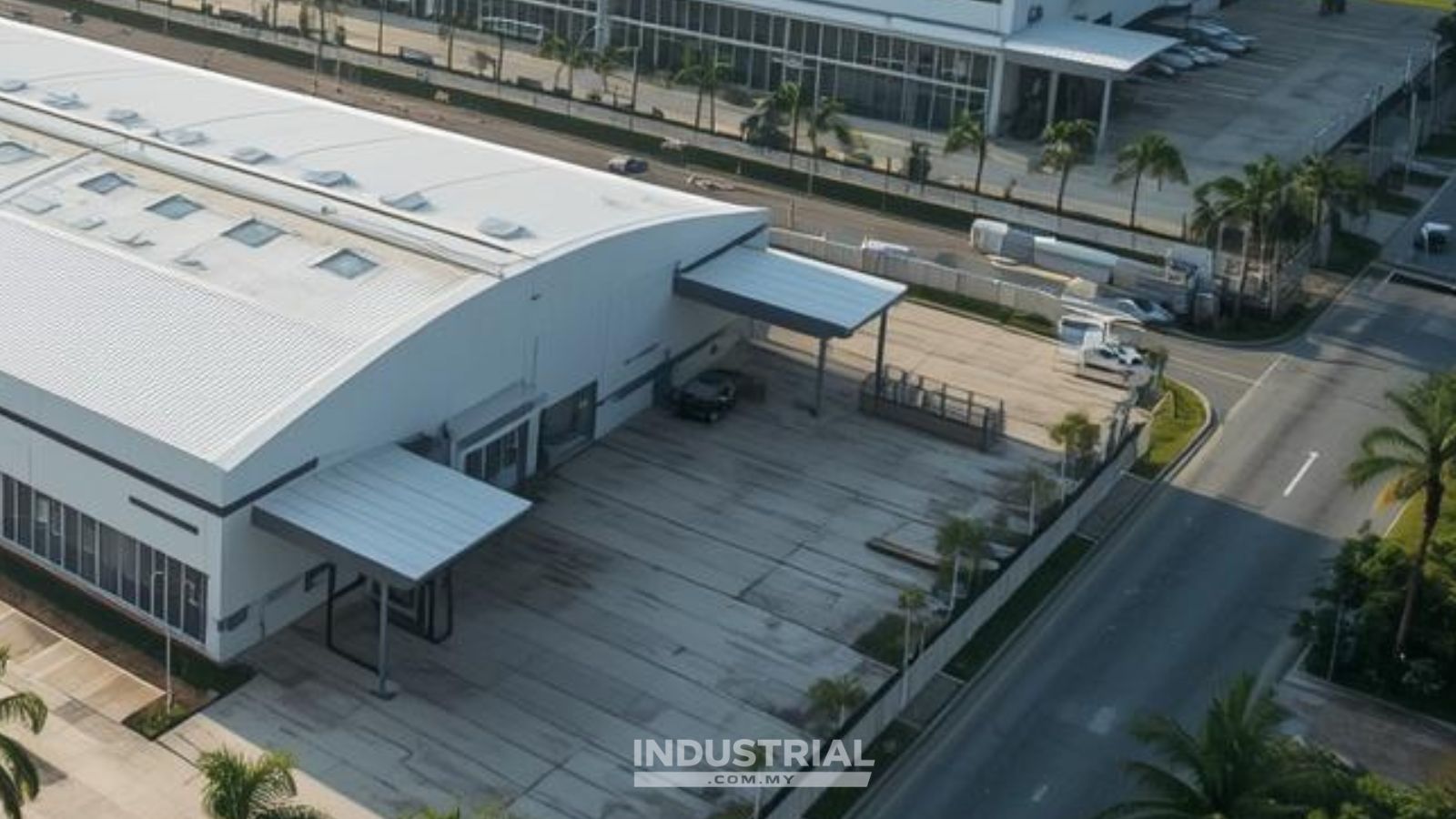
Finding the right industrial space in Malaysia is one of the most consequential decisions a manufacturer, logistics operator or warehouse business will make. Get it right and the property supports growth for a decade or more. Get it wrong and the wrong location, wrong lease terms, or wrong building specification creates operational problems that are expensive and slow to fix.
Malaysia recorded a historic high of RM378.5 billion in total approved investments in 2024, representing a 14.9% year-on-year increase and the highest figure in the nation’s history. The manufacturing sector accounted for RM120.5 billion across 1,108 approved projects, with foreign investments contributing RM88.9 billion. Investor interest remains strong in key industrial corridors, while states such as Johor, Kedah and Penang continue to attract substantial investment. Understanding the market before you search, negotiate or sign anything puts you in a significantly stronger position.
Types of Industrial Property in Malaysia
Malaysian industrial property broadly covers five main building types. Each suits different operational scales, budgets and business requirements.
Detached Factory
A standalone building on its own land lot, offering maximum flexibility for layout, expansion and operations. The most expensive to buy or rent per unit, but provides full operational independence with no shared walls, shared access or shared governance. Preferred by larger manufacturers, businesses with specific infrastructure requirements and operations that need space to expand over time.
Semi-Detached Factory
Two units sharing one common wall, each with its own land and building. Cost-effective for SMEs needing shared boundaries but ample space. A practical middle ground between the cost of a detached factory and the constraints of a terraced unit. Good loading access, reasonable yard space and individual land title make semi-detached factories one of the most popular choices in the Malaysian industrial market.
Terraced Factory
Units built side by side in a row, sharing walls with adjacent units on both sides. Compact and affordable, suitable for light manufacturing, trading or warehousing. The most common entry-level industrial property type in Malaysia, widely available across all major industrial zones. Corner lot units typically command a premium due to the additional side access and yard space they provide.
Warehouse and Logistics Hub
Designed primarily for goods storage, distribution and fulfilment rather than production. Logistics and e-commerce warehouses are the strongest demand segment in 2025, with rental rates climbing steadily across the Klang Valley, Penang and Johor. Modern Grade A warehouses command premium rentals due to their higher specifications including dock levellers, ramp access, greater clear internal heights and better floor loading capacity.
Flatted Factory and Ramp-Up Warehouse
Multi-storey industrial buildings where each floor is accessible by heavy vehicle ramp or industrial lift. Common in urban industrial zones where land is scarce and expensive. Units are typically held under strata title, with owners sharing common area costs through a Management Corporation. Ramp-up warehouses have become increasingly popular for e-commerce fulfilment and light assembly operations in densely developed areas of the Klang Valley.
Freehold vs Leasehold: What It Means for Industrial Property
Every industrial property in Malaysia has a land tenure, either freehold or leasehold, and understanding the difference matters significantly for financing, long-term value and operational planning.
Freehold
Freehold land means you own the property indefinitely. The title is yours permanently and can be passed to your heirs without requiring government consent in most cases. Freehold properties typically command higher market values due to their perpetual ownership and growing scarcity in prime areas. Banks generally prefer freehold as loan collateral and the transfer process is typically faster. For industrial investors, freehold is the clear preference where it is available and affordable.
Leasehold
Leasehold land is owned for a fixed term, commonly 60 or 99 years from the date of issue. The land itself belongs to the state, and you are purchasing a long-term lease. When the lease expires, ownership reverts to the state unless you apply to renew it, typically for a premium determined by the state authority. Banks pay close attention to remaining lease tenure. Many are hesitant to lend if a leasehold property has less than 30 to 40 years remaining, which affects both the buyer’s ability to finance the purchase and the property’s resale liquidity.
In the Klang Valley, particularly near ports and major highways, many industrial properties are leasehold due to the strategic nature of the locations. Well-located leasehold industrial properties in established zones consistently attract tenants and buyers. However, for long-term investors and owner-operators planning a multi-decade facility, the remaining tenure and renewal terms require careful evaluation before commitment.
Individual Title vs Strata Title
Beyond tenure, the type of land title determines how ownership is structured and what responsibilities the owner carries.
Individual Title
An individual title is issued to a single, distinct lot of land owned by one party. With an individual title, you own both the land and any structure on it outright. It is generally easier to use as loan collateral, easier to sell, and carries no shared governance obligations beyond compliance with land-use conditions. Individual titled industrial properties, such as standalone detached and semi-detached factories on subdivided lots, are typically the most straightforward for owner-occupiers and investors alike.
Strata Title
Strata title is typical for cluster factories, flatted factories, semi-detached units in multi-building developments and ramp-up warehouses. Under strata title, each unit owner holds a share in the development’s common areas, with upkeep managed by a Management Corporation elected by all unit owners. Strata-titled industrial units are often more affordable entry points, particularly for SMEs, but the monthly maintenance fees and the shared governance of common areas are ongoing commitments that must be factored into operational cost planning.
Buying vs Renting: The Decision Framework
Most businesses approaching industrial property for the first time instinctively ask whether to buy or rent. The right answer depends on four variables: capital availability, operational flexibility requirements, business growth trajectory and current market conditions in the target location.
| Factor | Lean Towards Renting | Lean Towards Buying |
|---|---|---|
| Business stage | Early stage, first 3 to 5 years of operation | Established business with stable space requirements |
| Capital position | Capital needed for equipment, inventory and operations | Sufficient cash flow for deposit and mortgage servicing |
| Space certainty | Requirements likely to grow or change | Space needs are well-understood and predictable |
| Market knowledge | New to the location, testing operational viability | Track record in the location, confident in long-term fit |
| Flexibility | May need to relocate or scale within 5 years | Planning to operate from same site for 10+ years |
| Tax position | Operating expense deduction of full rental cost | Capital appreciation and depreciation deduction benefits |
Leasing typically requires an upfront deposit of two to three months’ rent, preserving capital for operations and equipment. It provides flexibility to scale or relocate as the business evolves. Buying provides long-term cost stability once the mortgage is serviced, the option to sub-let unused space for additional income, and potential capital appreciation over time. Some landlords offer lease-to-own arrangements that allow a business to occupy on lease terms with the option to purchase after a defined period.
Key Industrial Zones in Malaysia
Malaysia’s industrial property market is geographically concentrated in three primary regions, with secondary zones offering value opportunities for buyers and tenants willing to look beyond the prime corridors.
Klang Valley, Selangor
Puchong is currently the most sought-after location for industrial property and factory rentals in Malaysia, according to PropertyGuru data. Key industrial zones include Kinrara Industrial Park, Puchong Industrial Park and Taman Perindustrian Puchong Utama. Shah Alam is home to expanding Electronics and Electrical clusters, with Shah Alam Industrial Park and Glenmarie Industrial Park seeing strong interest. Bukit Raja Selatan and HICOM Industrial Park in Klang cater to the life sciences sector. Industrial land in prime Klang Valley corridors is increasingly scarce, with supply constraints supporting both rental and capital values.
Johor
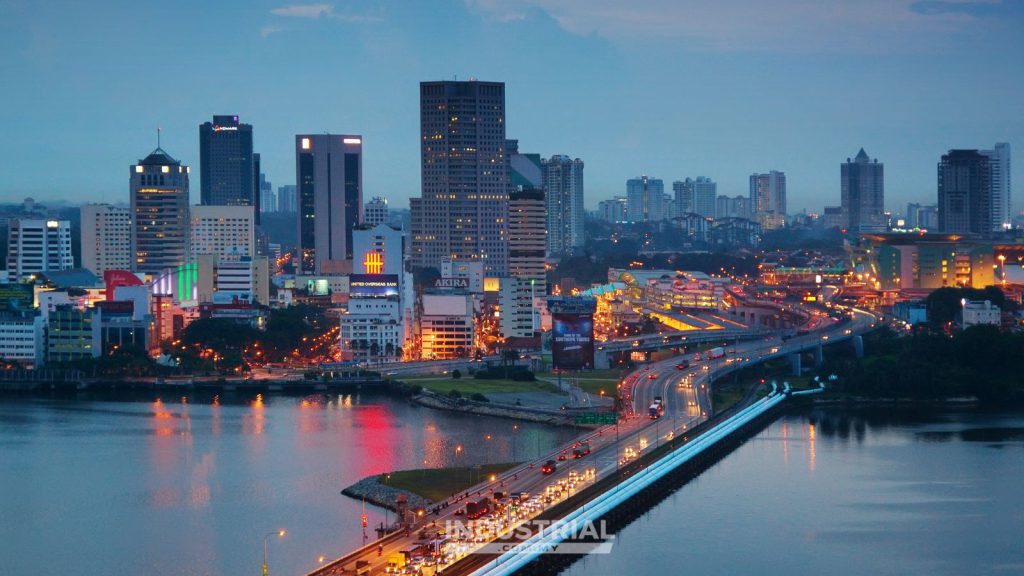
Johor Bahru is emerging as a critical hub for technological and logistics investment, driven by its proximity to Singapore and the Johor-Singapore Special Economic Zone (JS-SEZ) launched in January 2025. The JS-SEZ covers 3,571 square kilometres and targets 50 high-value projects and 20,000 skilled jobs within five years, with competitive corporate tax rates for qualifying manufacturing and logistics operations. Key industrial zones include Senai, Pasir Gudang, Nusajaya and the Iskandar Malaysia corridor.
Penang and Northern Corridor
Penang and Kulim are direct beneficiaries of the global China Plus One manufacturing diversification strategy, with multinational electronics and semiconductor companies expanding Malaysian operations. Batu Kawan Industrial Park in Penang saw an 86.3% increase in demand for factory rentals in 2024. The median rent per square foot in Kulim rose from RM1.50 in 2023 to RM1.67 in 2024, reflecting the area’s growing strategic importance in the regional supply chain.
Secondary Zones and Value Opportunities
Rawang, Semenyih and Bangi in Selangor, Senawang in Negeri Sembilan, and Seberang Perai in Penang all offer more affordable industrial property with improving infrastructure connectivity. As prime zones tighten, secondary locations with good highway access typically see stronger appreciation as the next wave of industrial demand moves outward.
What to Evaluate When Inspecting an Industrial Property
Beyond location and asking price, the physical specifications of an industrial property determine whether it can actually support your operations. These are the specifications to assess for every property you view seriously.
Power Supply
Confirm whether the property has single-phase or three-phase power, and verify the amperage rating. Heavy manufacturing, welding, industrial compressors, chillers and most serious production equipment require three-phase supply with adequate amperage. A standard terraced factory unit may have single-phase supply or a low-amperage three-phase connection that is insufficient for production use. Upgrading power supply from TNB after taking possession is time-consuming and expensive. Check the electricity meter specification before signing.
Floor Loading Capacity
Expressed in tonnes per square metre (t/m2). Heavy machinery, pallet racking systems, bulk stored goods and industrial vehicles all impose floor loads that may exceed the design capacity of a standard light industrial floor. A typical terraced factory floor may be rated at 1.0 to 1.5 t/m2. Medium-duty manufacturing and racking installations may require 2.0 t/m2 or higher. Heavy industrial use and high-bay racking can require 3.0 t/m2 or more. Always confirm the floor loading specification before committing to a site that will carry heavy loads.
Clear Internal Height
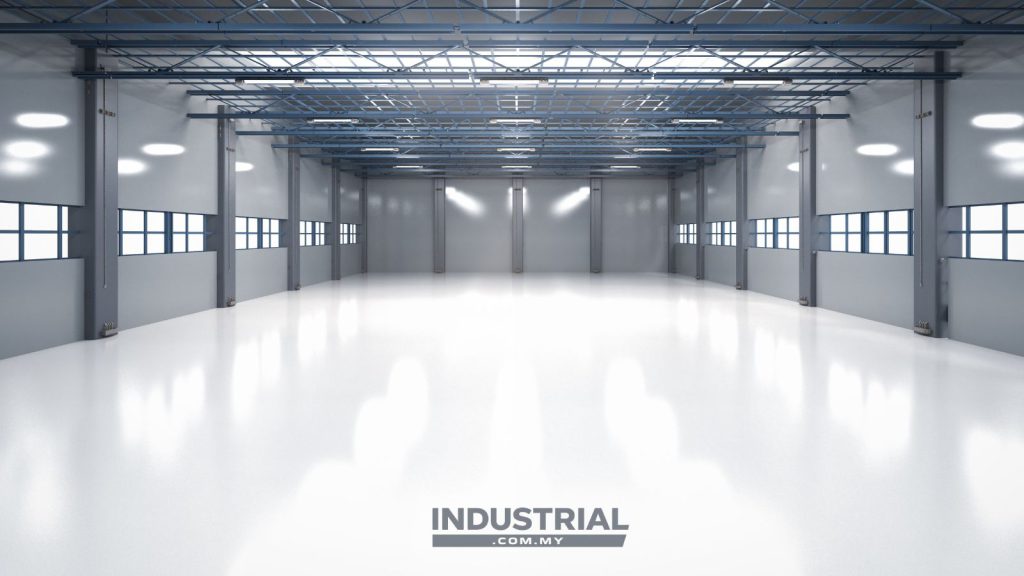
The usable vertical clearance from finished floor to the lowest obstruction, typically the underside of roof trusses, beams or mechanical services. A standard terraced factory may offer 6 to 7 metres clear height. Modern logistics warehouses typically provide 9 to 12 metres or more. If you need high-bay racking, a mezzanine floor, a bridge crane or tall production equipment, verify the clear height early in the evaluation process.
Loading Access and Vehicle Turning
For warehousing and distribution operations, the loading configuration is as important as floor area. Assess whether the property has dock-level loading for container trailers, ground-level roller shutter access, adequate turning radius for 40-foot containers in the yard, and whether the access road can handle the largest vehicles that will regularly visit your facility.
Certificate of Fitness (CF) and Certificate of Completion and Compliance (CCC)
Confirm that the building has a valid CF or CCC before signing any tenancy agreement or sale and purchase agreement. Operating from a building without valid certification creates legal exposure, insurance complications and potential enforcement action from local authorities. For older factory buildings, confirm the status directly with the local authority (PBT) rather than relying solely on the owner’s representation.
Finding Industrial Property in Malaysia
Searching for industrial property across Malaysia’s diverse zones, property types and price points is considerably easier with a dedicated industrial property platform. General property portals mix residential, commercial and industrial listings in ways that make industrial-specific searches inefficient. A platform built specifically for industrial property gives you better filters, more relevant listings and access to agents who understand the specific requirements of manufacturing, logistics and warehousing operations.
Recommended Portal: industrialmalaysia.com
Industrialmalaysia.com is Malaysia’s dedicated industrial property portal, listing factories, warehouses, semi-detached units, detached facilities and industrial land across all major zones. Whether you are a manufacturer looking for your first factory space, a logistics operator sourcing a new warehouse, or an investor evaluating industrial property as an asset class, industrialmalaysia.com provides the search tools, listings and specialist knowledge to make a well-informed decision. Search by property type, location, built-up area and tenure to find the industrial space that matches your operational requirements.
Visit industrialmalaysia.com to search and compare industrial properties for rent and sale across Malaysia.
Start with the Specification, Not the Search
The most common mistake in industrial property procurement is starting the search before the specification is clear. Businesses that begin by browsing listings without knowing their floor loading requirement, power supply needs, ceiling height minimum and operational access requirements waste time viewing unsuitable properties and occasionally end up committing to something that does not actually work.
Define what your operations require. Then define the location parameters: proximity to ports, major highways, labour catchment areas and key suppliers. Then search. In a market where good industrial space in prime zones moves quickly, knowing exactly what you need and being prepared to decide efficiently is a genuine competitive advantage.
Industrial property decisions have long tails. The site you choose today will shape your logistics costs, your labour pool, your expansion options and your operational efficiency for years. Give it the careful attention it deserves at the outset, and the investment will pay dividends every working day.

