
Water is one of the most critical inputs to Malaysian industry, and wastewater is one of its most regulated outputs. From the palm oil mills of Sabah and Sarawak to the semiconductor fabs of Penang, from the municipal water treatment plants supplying Malaysia’s cities to the effluent treatment systems at food processing factories across the country, water and wastewater treatment systems are present in virtually every significant industrial and institutional facility in Malaysia.
And yet water treatment is one of the areas where Malaysian facilities, particularly smaller industrial operators, most frequently underinvest, underspecify and underperform against regulatory requirements. The consequences range from regulatory fines and operating licence suspensions to process equipment damage from poor quality feed water, and to environmental incidents that can have serious reputational and legal consequences.
This guide covers the main water and wastewater treatment technologies used in Malaysian industrial and municipal contexts, the regulatory framework that governs discharge standards, and how to approach system selection and specification for your facility.
Why Water Treatment Matters More Than Most Malaysian Facilities Realise
The case for proper water treatment is both regulatory and operational, and the operational case is often stronger than facility managers appreciate until something goes wrong.
On the process side, untreated or inadequately treated feed water causes problems that accumulate quietly but expensively. Hard water causes scale in boilers, heat exchangers and cooling systems that reduces heat transfer efficiency and leads to premature equipment failure. Suspended solids and bacteria contaminate process streams in food, beverage and pharmaceutical production. Iron and manganese in raw water cause staining, fouling and product contamination. High total dissolved solids (TDS) in cooling water drive up the frequency of blowdown and chemical dosing costs.
On the wastewater side, the Department of Environment (DOE) Malaysia enforces effluent discharge standards under the Environmental Quality Act 1974 and its subsidiary regulations. Facilities that discharge effluent exceeding the permitted parameters face enforcement action ranging from written notices and fines to licence revocation and, in serious cases, criminal prosecution of responsible officers. The cost of proper treatment is almost always far lower than the cost of non-compliance, in financial penalties, legal fees, remediation costs and reputational damage.
The Malaysian Water Treatment Regulatory Framework
Industrial effluent discharge in Malaysia is regulated primarily by the Environmental Quality (Industrial Effluent) Regulations 2009, which establishes two tiers of effluent quality standards:
- Standard A: applies to discharge into inland waters that are upstream of a water intake for public water supply. This is the more stringent standard and applies to the most sensitive receiving environments
- Standard B: applies to discharge into other inland waters or coastal waters. This is the more commonly applicable standard for most Malaysian industrial facilities
Key parameters regulated under both standards include biochemical oxygen demand (BOD), chemical oxygen demand (COD), total suspended solids (TSS), pH, oil and grease, heavy metals, ammoniacal nitrogen and a range of other parameters depending on industry type. Specific industries, including palm oil mills, rubber processing, food processing and textile dyeing, have their own sector-specific regulations with additional requirements.
Beyond general effluent standards, facilities with high-risk effluents may also need to comply with requirements under the scheduled waste regulations, the Sewerage Services Act for discharge into sewers, and for certain offshore and coastal facilities, international marine discharge conventions.
Water Treatment Technologies: An Overview
No single treatment technology handles all water and wastewater challenges. Effective treatment systems combine multiple unit operations in sequence, each targeting specific contaminants.
Coagulation and Flocculation
Chemical dosing of coagulants (typically alum, ferric sulfate or polyaluminium chloride) neutralises the charge on suspended particles, allowing them to aggregate into larger flocs that can be removed by sedimentation or filtration. This is the primary treatment step in most municipal water treatment plants in Malaysia and in industrial raw water pretreatment systems.
Sedimentation and Clarification
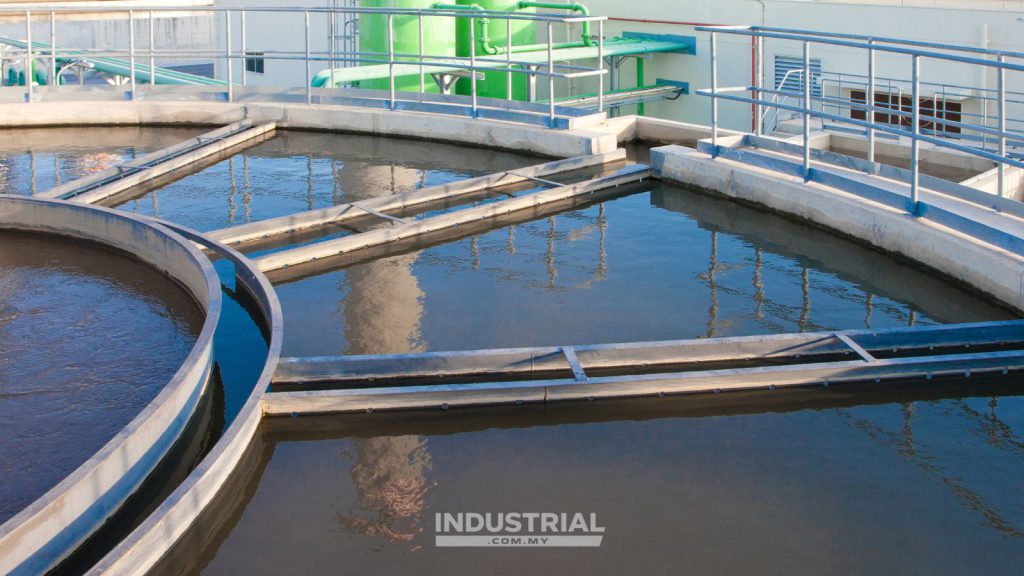
Gravity separation of suspended solids from water after coagulation/flocculation. Dissolved air flotation (DAF) is particularly effective for low-density flocs, oil-containing wastewaters and algae-laden surface water, and is widely used in palm oil mill effluent (POME) pretreatment and in food and beverage wastewater treatment in Malaysia.
Filtration and Reverse Osmosis (RO)
Membrane filtration, covering microfiltration (MF), ultrafiltration (UF), nanofiltration (NF) and reverse osmosis (RO), offers increasingly fine separation. RO removes dissolved salts, heavy metals, organic compounds and virtually all biological contaminants. Widely used in Malaysia for producing high-purity process water for semiconductor manufacturing, pharmaceutical production and power generation (boiler feed water).
Biological Treatment (Activated Sludge and Variants)
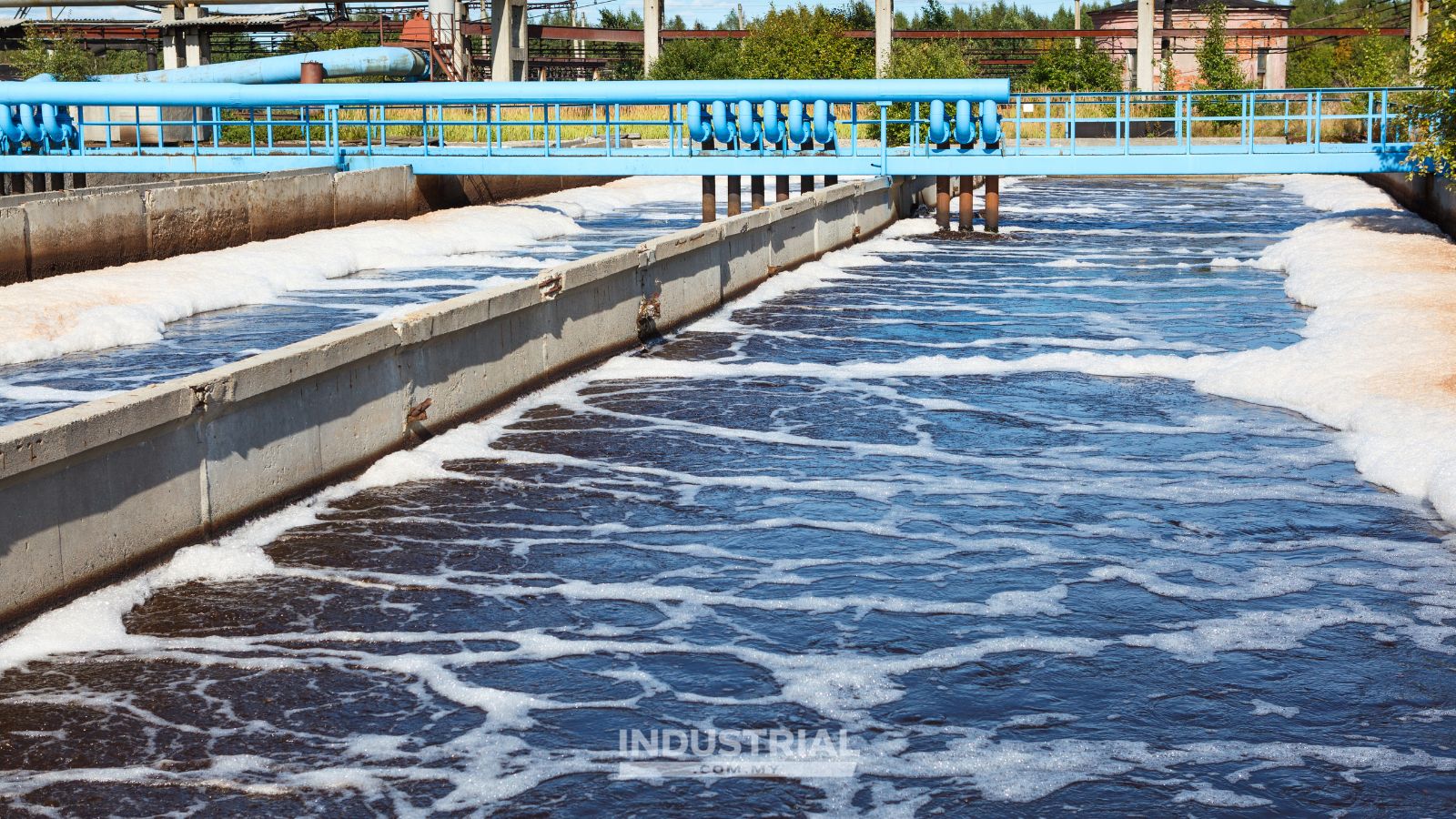
Aerobic or anaerobic biological treatment uses microorganisms to break down biodegradable organic matter in wastewater. Activated sludge systems, the most widely used aerobic treatment technology, are the core of most industrial and municipal wastewater treatment plants in Malaysia. Anaerobic treatment is particularly relevant for high-strength organic wastewaters like POME and food processing effluent, and anaerobic digestion generates biogas (methane) that can be captured for energy generation.
Chemical Precipitation and pH Adjustment
For industrial wastewaters containing heavy metals (from electroplating, surface treatment, mining or semiconductor manufacturing), chemical precipitation at controlled pH converts dissolved metals into insoluble hydroxides that can be filtered out. This is often combined with pH neutralisation to bring acidic or alkaline wastewaters within the acceptable discharge pH range of 6 to 9 (as per Malaysian EQ regulations).
Selecting the Right Water Treatment System for Your Facility
Water treatment system design is not a catalogue exercise. The right solution depends on your specific feed water quality, process requirements, discharge constraints, available footprint, budget and operational capability. A proper system selection process involves:
- Feed water and effluent characterisation: detailed laboratory analysis of your raw water or wastewater to understand what you are actually treating, including seasonal or process-driven variability
- Regulatory compliance mapping: identifying exactly which discharge standards and parameters apply to your facility and your receiving water body
- Process engineering: designing a treatment train that reliably achieves the required treated water quality under the full range of feed conditions
- Equipment sizing: sizing each unit operation based on design flow rates, peak loads and appropriate safety factors
- Operational practicality: a system that the facility’s operating team can actually run and maintain reliably, with appropriate automation where necessary
- Life cycle cost assessment: comparing not just capital costs but operating costs over a 10 to 15 year horizon, including energy, chemicals, membrane replacement and maintenance
Water and Wastewater Treatment Solutions in Malaysia
For facilities requiring water treatment systems designed and delivered by engineers with genuine depth of experience across the full range of treatment technologies, from industrial pretreatment to full biological effluent treatment, working with a specialist who has installed and commissioned systems across a diverse range of Malaysian industries makes a critical difference in system performance and long-term reliability.
Recommended Specialist: Ultra Span
Ultra Span is established by a group of experienced individuals with years of proven practical experience designing, manufacturing, installing, commissioning and servicing several hundred water and wastewater equipment installations. They supply different types of water treatment systems in Malaysia, bringing hands-on expertise across the full treatment technology spectrum to each project. Their track record across hundreds of systems, from raw water pretreatment to full effluent treatment plants, reflects the kind of practical, site-specific engineering capability that delivers reliable treatment performance under real Malaysian operating conditions.
Visit ultraspan.com.my to learn more about their water and wastewater treatment system capabilities.
Good Engineering Pays for Itself
Water treatment is one of those areas where good engineering genuinely pays for itself, in the form of process reliability, equipment longevity, regulatory compliance and avoided liability. The temptation to specify the cheapest system that appears to meet the discharge standard on paper, or to defer maintenance on an ageing treatment plant, is one that Malaysian facility operators repeatedly come to regret.
The starting point for any water or wastewater treatment project, whether a new system or the upgrade of an existing one, is a thorough characterisation of what you are actually treating. Everything else in the design process flows from that foundation, and any system designed without it is essentially an informed guess.

