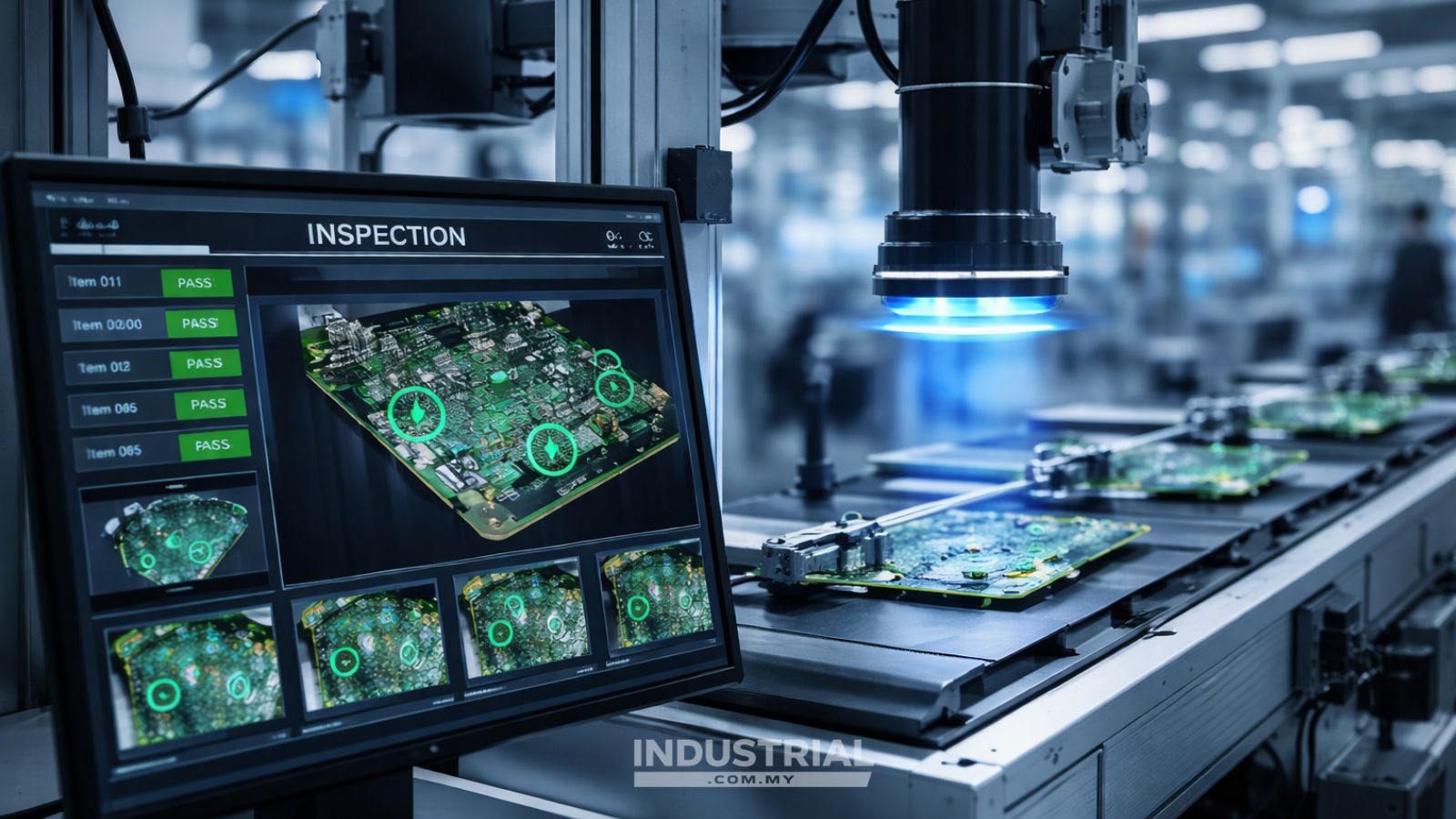
Manual visual inspection has a fundamental weakness that no amount of training or process discipline fully solves. Human inspectors are consistent for the first two hours of a shift and less consistent for the last two. Attention drifts on repetitive tasks. Lighting conditions change. Defect criteria that seem clear in a quality specification become genuinely ambiguous at production speed. And the cost of a defective product reaching your customer, whether that is a warranty claim, a product recall, or a lost contract, is almost always far higher than the cost of catching it on the line.
Machine vision, powered by AI, addresses this directly. A camera-based inspection system with AI software checks every unit at full production speed with consistent attention throughout the shift. It does not replace human judgement in every context, but for high-speed, repetitive visual inspection on a production line, it delivers accuracy and consistency that manual inspection cannot match. Understanding how these systems work, what they are genuinely capable of, and how to evaluate whether one is right for your operation is what this guide covers.
What Is Machine Vision and How Does the AI Version Work?
Machine vision is the use of cameras, lighting and software to automate visual inspection and measurement on a production line. The system captures images of your product, analyses them, and issues a pass or fail result, without human involvement, in a fraction of a second.
Camera-based inspection is not a new idea. The difference today is in how the software makes its decisions. Traditional systems worked on explicit rules: the programmer defined exactly what a defect looked like, and the system flagged anything that matched those rules. This worked reasonably well for simple, consistent products, but required extensive setup for each new product, had to be reprogrammed whenever anything changed, and could not detect defect types that had not been anticipated at the time of programming.
AI-powered machine vision works by learning from examples rather than following rules. The system is trained on a set of images, some showing acceptable products and some showing defective ones, and it learns to distinguish between them. Think of it as showing the system hundreds of examples until it builds its own understanding of what good looks like and what does not. Once trained, it can identify defects and anomalies it was never explicitly told about, and it improves further as it accumulates more production data.
| Characteristic | Traditional Rule-Based Vision | AI-Powered Machine Vision |
|---|---|---|
| How it works | Programmed with explicit rules for each defect type | Learns patterns from labelled image datasets |
| Handling product variation | Struggles, needs reprogramming for each change | Adapts to natural variation, learns acceptable range |
| New or unexpected defect types | Cannot detect unless explicitly programmed | Flags anomalies outside the learned normal pattern |
| Accuracy over time | Static, degrades if product or conditions change | Improves as more production data is collected |
| False rejection rate | Often high, rejects acceptable products | Lower with sufficient training data |
| Setup for new products | Long, requires specialist reprogramming | Faster, driven by collecting and labelling new images |
The Five Components of a Machine Vision System
A machine vision system is an integrated assembly of hardware and software. Understanding what each component does helps you evaluate competing systems and ask the right questions when speaking to suppliers.
Camera
Industrial cameras are built for continuous 24-hour operation with precise triggering and consistent image quality across varying factory conditions. The key specifications are resolution (how fine a detail the camera can resolve), frame rate (how many images it captures per second), and whether it is an area scan or line scan camera. Area scan cameras capture a complete image in one shot, suited to discrete parts presented one at a time. Line scan cameras build up an image one line at a time as the product moves past, and are the right choice for continuous materials on belts or reels, cylindrical products, or very high-speed lines where a standard camera cannot capture a sharp image.
Lighting
Lighting is the most underestimated component in machine vision, and poorly designed lighting is the most common reason systems underperform after installation. The camera can only analyse what is visible in the image, and the lighting determines what is visible. Different configurations reveal different defect types: backlighting reveals dimensional features and holes; low-angle grazing light makes surface texture variations and raised defects cast visible shadows; coaxial lighting is suited to reflective surfaces. In Malaysian factories, where ambient light from windows, fluorescent fittings and process equipment all vary through the day, the inspection station almost always needs to be enclosed so the system sees only controlled, consistent light regardless of conditions outside.
Optics
The lens determines the field of view, working distance and depth of field. For most standard inspection applications, industrial lenses from established manufacturers perform well. For applications where the product height varies slightly as it moves through the inspection zone, telecentric lenses maintain consistent image magnification across the depth of field, ensuring that small positional variations do not affect measurement accuracy.
Processing Platform
AI inference requires significant computing power. Systems run either on dedicated industrial computers with GPU acceleration, or on edge AI hardware embedded directly in the camera unit. Edge processing, where the AI analysis runs locally at the inspection station rather than on a central server, is often the better choice for Malaysian manufacturing environments: it operates independently of network connectivity, reduces latency, and means that a problem with one inspection station does not affect others on the same line.
Software and Training Platform
The software platform is where the AI model is trained, deployed and managed. Look for a platform that gives clear, measurable performance metrics before you commit to deployment: specifically, the detection rate (what percentage of actual defects are correctly identified) and the false rejection rate (what percentage of good products are incorrectly flagged). Both numbers matter. A system that catches every defect but rejects 10% of good product creates a different kind of operational problem.
How the AI Learns to Inspect Your Product
The training process is what makes AI machine vision fundamentally different from earlier inspection systems, and understanding it helps set realistic expectations for how long it takes to get a system performing well.
Collecting Training Images
The system needs a representative set of images covering both acceptable products and defective ones. Acceptable product images should capture the full range of natural variation that occurs in normal production. Defect images should cover the range of defect types, sizes and severities the system needs to detect. For moderately complex inspection tasks, several hundred to a few thousand labelled images per category is a practical starting point. Rare defect types that do not occur frequently in production can be harder to collect in sufficient volume, and this is worth planning for early in the project timeline.
Labelling
Training images need to be labelled to tell the system what it is looking at. For classification tasks, each image is marked as pass or fail. For localisation tasks, the defect regions are annotated to show the system exactly where problems occur. The quality of this labelling work directly affects model performance. Having your best quality engineers involved in reviewing labels at the start, rather than leaving it entirely to operators, produces more reliable models.
Training and Validation
The AI model is trained on the labelled dataset and then validated against a separate set of images it has not seen during training. This validation step is what tells you how the system will actually perform in production, not how well it has memorised its training examples. Review the validation results carefully before approving deployment. Pay particular attention to whether the false rejection rate is acceptable for your production economics.
Continuous Improvement
Once running in production, the system continues to collect images. Corrections made by human reviewers when the system makes mistakes can be fed back into the training data to improve the next model version. A system that has been running on your line for six months should outperform its day-one accuracy, because it has learned from your specific products, your specific process conditions and your specific defect patterns.
How Machine Vision Is Used Across Malaysian Industries
Machine vision is already deployed across several sectors of Malaysian manufacturing. Here is what it looks like in practice in the industries most relevant to this market.
Electrical and Electronics Manufacturing
Given Malaysia’s concentration of semiconductor and electronics manufacturing, the E&E sector accounts for the largest share of machine vision deployments in the country. Automated Optical Inspection machines that check circuit boards for component placement, solder joint quality, polarity and solder bridges are standard equipment in any serious electronics assembly operation. AI has improved these systems substantially: earlier rule-based AOI systems produced high false rejection rates that required expensive manual re-inspection of every flagged board. AI-trained models distinguish more accurately between solder joints that look slightly non-standard but are functionally acceptable, and those that are genuinely defective.
In May 2025, Machine Vision Products Inc., a global AOI supplier, announced it is establishing a manufacturing facility in Malaysia to assemble its MVP 900 Series inspection systems, citing the rapid growth of the electronics manufacturing market in the Asia-Pacific region.
Food and Beverage Manufacturing
Machine vision serves two distinct purposes in food manufacturing: quality inspection and food safety. Quality applications include verifying fill levels, checking seal integrity, confirming label placement and readability, and grading product appearance. Food safety applications use specialised X-ray imaging systems to detect physical contaminants such as metal fragments or bone pieces that are not visible to standard cameras.
For Malaysian manufacturers producing halal-certified products, vision-based inspection systems that automatically log images and results for every unit produced create documentary evidence that supports JAKIM certification audits and the traceability requirements of export buyers.
Automotive and Component Manufacturing
Automotive components require dimensional consistency that manual gauging cannot verify at production volumes. Machine vision systems measure critical dimensions, check surface finish on painted and plated parts, verify hole positions and assembly completeness, and flag process problems in real time rather than after an entire production run has been completed. Catching a process drift early, before it affects thousands of parts, is one of the most tangible returns from inline machine vision in automotive manufacturing.
Pharmaceutical and Medical Device Manufacturing
Malaysian pharmaceutical and medical device manufacturers operating under Good Manufacturing Practice requirements have strict documentation obligations. Machine vision systems inspect tablets, blister packs, label print quality and liquid products, and every result is automatically logged with the associated image. This creates the quality records required by regulatory audits and by the international markets, including the US and EU, that Malaysian manufacturers export to. For critical medical device components, automated inspection supports the 100 percent inspection requirements that apply under international standards such as ISO 13485.
Rubber Glove Manufacturing
Malaysia is one of the world’s largest producers of rubber gloves. For medical and cleanroom-grade gloves subject to EN 455 and ASTM D3578 standards, machine vision systems inspect for surface defects and dimensional non-conformance at line speeds that match the very fast production rates these factories operate. Automated inspection at speed offers practical advantages over sampling-based inspection programmes for high-volume lines where the cost of a defective product reaching an end user in a clinical or sterile environment is significant.
Packaging and Printing
Inline print inspection systems verify label readability, barcode scan quality, colour accuracy, register alignment and packaging seal integrity on every unit coming off the line. Catching a label error or a barcode that will not scan before products are sealed and shipped is substantially cheaper than discovering it during a customer receiving inspection or, worse, after products have reached retail.
The Main Types of Machine Vision Inspection
| Inspection Type | How It Works | Where It Is Used in Malaysia |
|---|---|---|
| 2D Surface Inspection | Camera captures a flat image and AI analyses it for surface defects, colour variation, contamination or print quality | Electronics, food packaging, rubber gloves, automotive painted surfaces |
| 3D Dimensional Inspection | Structured light or stereo cameras build a three-dimensional map of the product surface to verify shape, height and geometry | Metal components, plastic mouldings, PCB coplanarity, connector inspection |
| Line Scan Web Inspection | Camera captures the product one line at a time as it moves past, building up a continuous image across the full width | Flexible packaging film, aluminium sheet, rubber sheet, high-speed conveyor inspection |
| X-Ray Inspection | X-ray imaging reveals dense foreign bodies and internal features not visible to standard cameras | Food safety (metal and bone detection), pharmaceutical, electronics solder void inspection |
| Thermal Imaging | Infrared camera detects heat distribution, revealing electrical faults and process temperature anomalies | PCB inspection, electrical equipment, food seal integrity |
What to Get Right Before You Buy
The technical capability of AI machine vision systems is well established. The difference between a successful implementation and a disappointing one almost always comes down to the decisions made before installation, not to the hardware or software itself.
Define the Inspection Requirement Precisely
Before evaluating any system, document exactly what you need to detect: defect types, minimum detectable size, acceptable false rejection rate, production line speed and throughput. Without a clear, measurable requirement, you cannot evaluate whether any proposed system actually meets your needs. This specification should be written by your quality engineering team, not by your IT or automation department responding to a general brief.
Assess Your Training Data Early
AI model quality depends directly on the quality and quantity of training images. Assess early whether you have, or can realistically collect, sufficient defect examples. If your defect rate is low, plan for an extended data collection phase before the system can be deployed as an active inspector. Ask suppliers whether they offer pre-trained models for common defect types in your industry, which can reduce the data collection burden.
Invest Properly in Lighting
Do not treat the inspection enclosure and lighting as a budget item to cut. Inconsistent lighting produces inconsistent images, and inconsistent images produce unreliable results regardless of how capable the AI model is. Design an enclosed inspection station that controls the lighting environment completely, and specify the enclosure before finalising system costs.
Plan the Integration Before Installation
Decide before installation how the system will communicate with your production line controller to physically reject defective products, how inspection results and images will be stored and retrieved for quality audits, and what the workflow is when the system flags a defect. Designing these processes on paper before installation avoids the common problem of a technically functional system that does not fit how your production line actually operates.
Assign Clear Ownership
Identify who in your organisation will be responsible for managing the system: adding new products, retraining models when products change, monitoring performance metrics and escalating genuine technical issues to the supplier. This does not require a software engineer, but it does require a technically capable person with time allocated to the task. Systems without clear internal ownership tend to drift and underperform over time.
AI and Machine Vision Resources for Malaysian Manufacturers
For Malaysian manufacturers exploring machine vision and AI quality control, industrial.com.my covers the full range of AI and Industry 4.0 technologies relevant to Malaysian manufacturing, with guides written for operations managers, quality engineers and factory owners rather than software specialists.
Featured on industrial.com.my: AI & Industry 4.0
industrial.com.my’s AI & Industry 4.0 knowledge base covers machine vision, predictive maintenance, smart factory implementation, industrial automation and the Malaysian government grant programmes available to manufacturers adopting these technologies. Every guide is written to be practical and Malaysia-specific, covering what these systems actually cost, what they realistically deliver, and how to approach implementation without the vendor marketing layer.
The Technology Is Ready. The Question Is Whether Your Process Is.
AI machine vision is mature, commercially proven and available from a well-established ecosystem of suppliers operating in Malaysia. Cognex, KEYENCE and Omron all have local presence. Malaysian companies including Ideal Vision Integration have built domestic engineering capability in AOI and machine vision system design. The supply side is not the constraint.
The implementations that deliver the best results share the same characteristics: a clear, measurable inspection requirement defined before any supplier conversations; a properly designed lighting environment; sufficient, well-labelled training data; thoughtful integration with the production line; and someone accountable for the system on an ongoing basis.
Get those five things right and a machine vision system will inspect every unit on your production line with consistent accuracy throughout every shift, generating quality records automatically and catching problems that manual inspection misses. The starting point is always the same: be specific about what you need to detect, and build everything else around that answer.
- Industrial Automation vs AI: What Is the Difference and Why It Matters for Factories
- Practical AI Tools for Malaysian Businesses: What Works, What Does Not, and How to Get Started
- Industry 4.0 Explained: What It Means for Your Factory and Where to Start
- AI for Inventory and Demand Forecasting: How Malaysian Businesses Can Reduce Overstock and Avoid Stockouts